
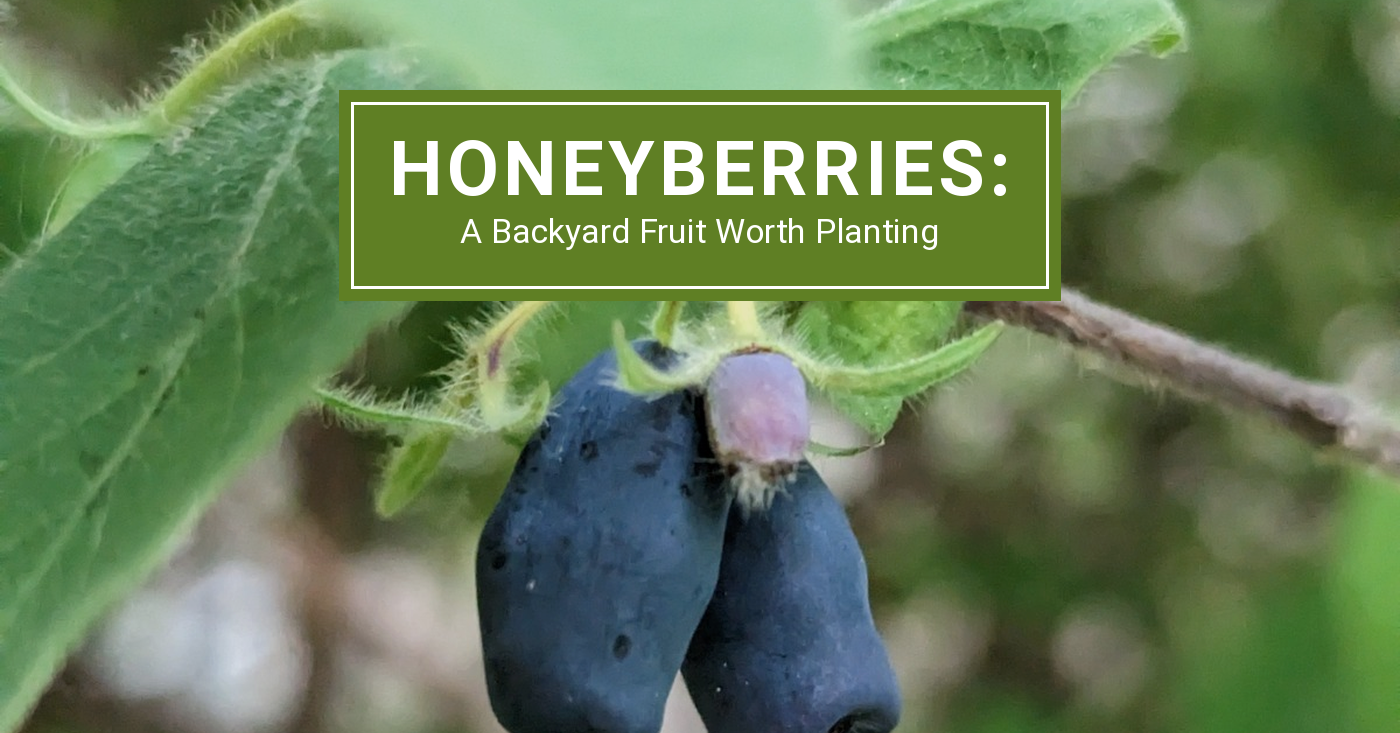
Ah, honeyberries. You may not know them yet, and that's exactly why we want to tell you about them.
Sometimes called haskap, honeyberries (Lonicera caerulea) are a small fruit bush native to cool northern climates. They're one of the first plants to bloom in spring and one of the first fruits to ripen in early summer. They handle Wisconsin winters with ease, and they taste like a blueberry's more interesting cousin.
This year we're carrying two standout varieties: Aurora and Indigo Gem. Both are quickly becoming customer favorites and we'll show you why.
Meet the Haskap
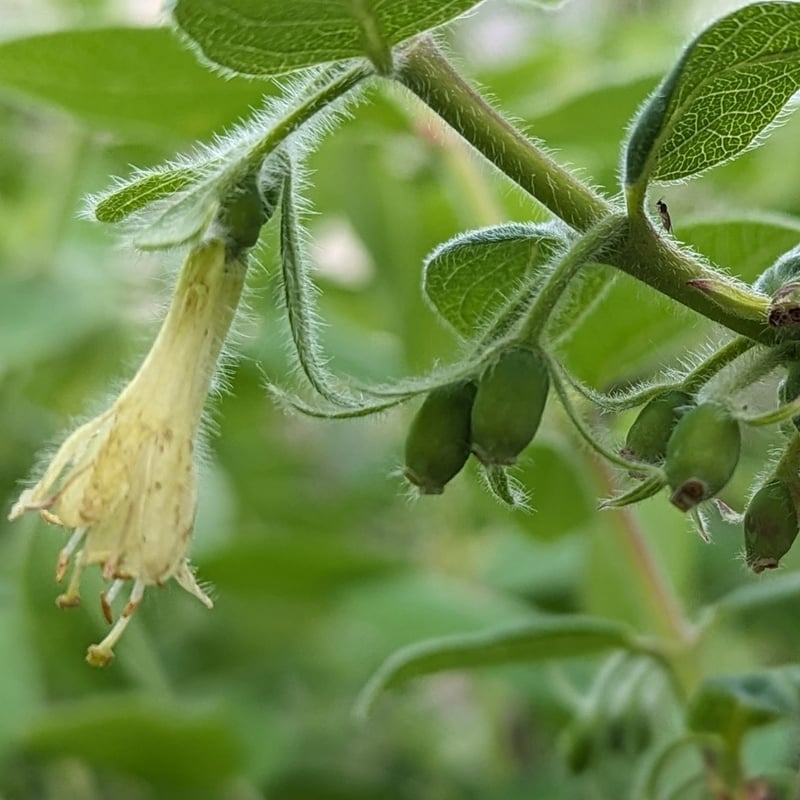
Honeyberries grow on a tidy, rounded shrub that tops out at four to six feet, with no thorns and no suckering pups to chase down. They're hardy to USDA zone 3, which makes them tougher than just about any other fruit you can grow in Wisconsin. Flowers appear before most other plants are awake, in early to mid spring. By mid June you're picking fruit while your strawberries are still warming up.
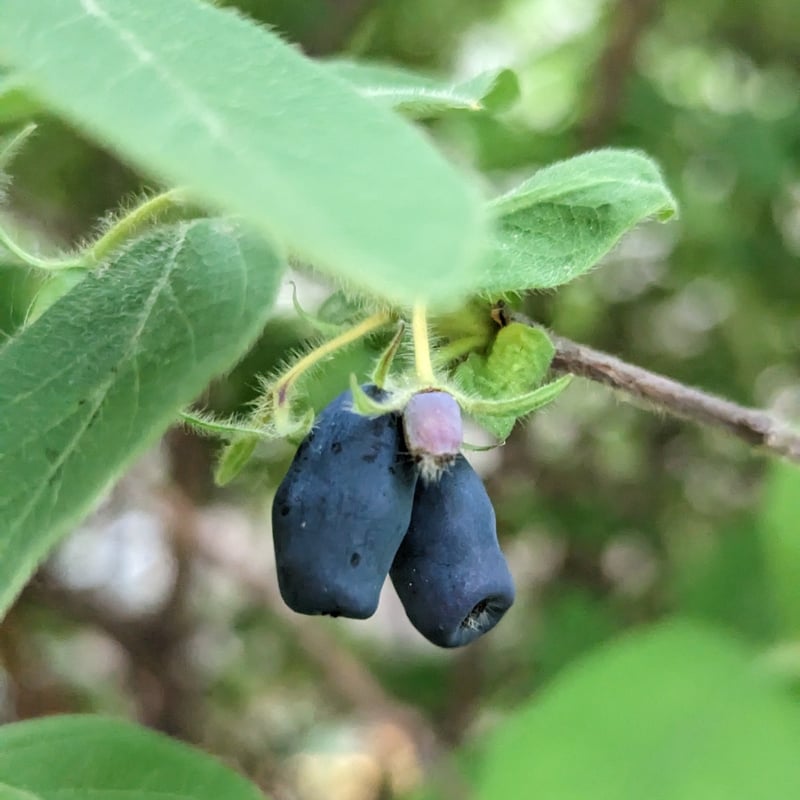
The berries are deep blue-purple, oblong rather than round, about the size and weight of a blueberry but elongated. They look like blueberries that decided to stretch.
A Bee's First Stop
If you're trying to support pollinators, this is one of the best plants we sell. Honeyberries bloom earlier than almost anything else in the garden, which means they're putting out nectar when bees are just waking up and looking for food. One of our team members has a few honeyberry bushes at home and says they're always buzzing once the flowers open.
That early-spring nectar is more valuable to a hive than later-season blooms because it's scarce. Pair that with the heavy fruit production these plants put out, and you get a backyard plant that feeds both you and the local bees.
Flavor That Out-Berries the Blueberry
Bite a ripe honeyberry and the first thing you notice is that it isn't quite a blueberry. The flavor reads as blueberry up front, raspberry in the middle, and a low note of blackcurrant or grape on the back end. Some varieties lean a little more cherry. Some lean tart, some sweet.
For the nutrition-curious: research from Canadian growers and the University of Saskatchewan, where the modern haskap was bred, shows honeyberries carry roughly 1.6 times the antioxidants of blueberries and four times that of strawberries on the standard ORAC test. Vitamin C content is high too. The dark pigment in the skin (anthocyanins) is what does most of the work.
You can eat them fresh, freeze them, bake them into pies and crumbles, blend them into smoothies, or turn them into jam. Indigo Gem in particular makes a great wine.
It Takes Two to Tango
Here is the most important thing to know before you buy a honeyberry: they need a friend.
Honeyberries are not self-pollinating. A single plant will set fruit, but lightly. To get a real harvest you need at least two different varieties planted within about 50 feet of each other, blooming at the same time. That's why Aurora and Indigo Gem make such a good pair at McKay. They're proven cross-pollinators with overlapping bloom periods, and together they produce a much heavier crop than either one would alone.
Plant them within sight of each other. Bees do the rest.
Aurora: The Big Berry
Aurora is the headliner if you want size. Aurora carries some of the largest berries of any honeyberry variety, which makes picking faster and snacking better. The plant grows five to six feet tall and wide, with an upright habit and lighter leaf coverage so the fruit is easy to spot and reach. Ripening comes later in the season than Indigo Gem, so paired together you get a longer harvest window.
- Best for: fresh eating, desserts, baking
- Pairs with: Indigo Gem
- Mature size: 5-6' x 5-6'
Indigo Gem: The Early Riser
Indigo Gem was developed at the University of Saskatchewan, the breeding program that put the modern haskap on the map. It's one of the most productive varieties available and ripens in mid June, earlier than Aurora, so the two together stretch your honeyberry season by a couple of weeks. The plant is a little smaller, four to five feet tall and wide, which suits a smaller yard or a tighter foundation planting.
- Best for: fresh eating, jam, wine making
- Pairs with: Aurora
- Mature size: 4-5' x 4-5'
Shop the Indigo Gem Honeyberry
Care That's Almost Embarrassingly Easy
Honeyberries are about as low-effort as a fruit gets.
- Sun: full sun for best fruit, but they tolerate part shade better than most berries
- Soil: any normal garden soil. Unlike blueberries, no special acidic soil prep is needed. They're happy from pH 5.5 to 8
- Water: keep them moist their first year while the roots establish. After that, they're relatively drought-tolerant
- Pruning: very little needed. Remove dead or damaged wood in late winter
- Pests: few problems. Birds love the fruit though, so netting helps if you want to keep more of the harvest for yourself
- Fertilizer: a yearly top dress of compost or a balanced fertilizer in spring is plenty
Plants set a small amount of fruit in years one and two, with full production by years three or four. Patience pays off.
More Than a Fruit Bush
While we're leading with the fruit, don't overlook honeyberries as a landscape plant. The yellow spring flowers are early bee food when little else is blooming. Foliage is a clean blue-green through summer. Fall color is a soft yellow. The shrub itself has a pleasing rounded shape and works well in a foundation planting, mixed border, or as a low informal hedge. Honeyberries make a strong case for edible landscaping: a plant that earns its space twice, once in fruit and once in form.
What Our Customers Say
"The plant was well packed for shipping and I must say better than all other nurseries I have ordered from. Plant was healthy and in great shape. Thank you McKay Nursery. You are leaps and bounds above your many competitors."
Customer review on the Aurora Honeyberry product page
In Summary
Honeyberries are an underrated, undersold backyard fruit. They're the toughest berry you can grow in Wisconsin, ripen earlier than anything else, and taste like a blueberry's more interesting cousin. Plant Aurora and Indigo Gem together to get a full crop. Wait three years. Make a lot of pie.
Looking for more fruit and edible growing guides? Check out our Green Tips page for posts on pruning fruit trees, mulching, and more!


