A new neighbor builds a deck right where your morning coffee used to look out over the yard. A subdivision fills in behind your property line. A road gets busier. There are a hundred good reasons to want a privacy screen, and only a few really good plants to make it happen.
Privacy trees are one of the most-asked-about plants we sell at McKay. Not because they're flashy. Because they're functional. A row of the right evergreen, planted well, can block sight lines, knock down wind, muffle road noise, and outlive everything else in your landscape. Some of these varieties handle USDA zone 3 winters in Wisconsin. Others stretch as far south as zone 9.
Here are the ten varieties we recommend most, organized by the job you're hiring them to do.
Picking Your Privacy
Before the variety list, four questions to settle before you order:
- How much space do you actually have? Mature width is the number that bites people. A Green Giant Arborvitae will be 12-18 feet wide at maturity. A North Pole Arborvitae stays under 5. Plant the wrong one against a fence and you're either staring at a green wall in five years or pruning forever.
- Your zone? USDA zone matters because some of the most popular privacy trees in the South (Leyland Cypress, for instance) won't survive a Wisconsin winter. We've listed zone ranges for every variety below.
- Sun or shade? Most evergreens want full sun. A few, like Hicks Yew, tolerate part shade. None do well in deep shade.
- Deer pressure? This is the single biggest reason a "perfect" privacy planting fails in year three. We'll cover it below.
Fast-Growing Solid Screens
When you need privacy yesterday, these two are the workhorses.
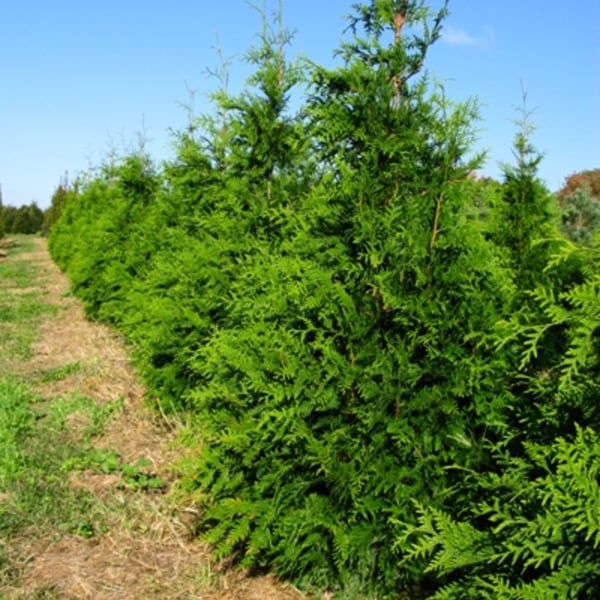
Green Giant Arborvitae
The most popular privacy tree in America, and for good reason. Green Giant grows 3-4 feet per year, holds a dense pyramidal form without pruning, and shrugs off most diseases that affect other arborvitae. It tops out around 30-50 feet tall and 10-18 feet wide. Zone 5-8, so it works for most of the country south of central Wisconsin.
Shop Green Giant Arborvitae
Thuja standishii x plicata 'Green Giant'
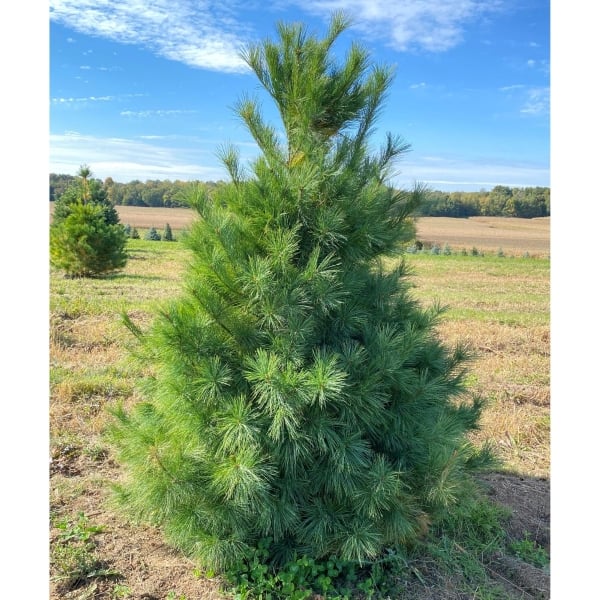
Eastern White Pine
A Midwestern native that grows fast (2-3 feet per year once established) and develops a soft, feathery texture as it matures. Eastern White Pine doesn't make a tight formal hedge like arborvitae does, but it screens beautifully when planted as a row and supports native wildlife along the way. Tolerant of poor soils. Zone 3-8.
Shop Eastern White Pine
Pinus strobus
Tight Columns for Narrow Lots
If you have a 40-foot property line and ten feet of useable depth, the wide growers above won't work. These columnar evergreens are designed to give you height without the spread.
Emerald Arborvitae
The classic formal hedge. Emerald (sometimes labeled 'Smaragd') stays under 4 feet wide and reaches 10-15 feet tall. The foliage holds its bright green color through winter while most other arborvitae bronze out. Zone 4-7. The single most popular tight-column option for residential properties.
Shop Emerald Arborvitae
Thuja occidentalis 'Smaragd'
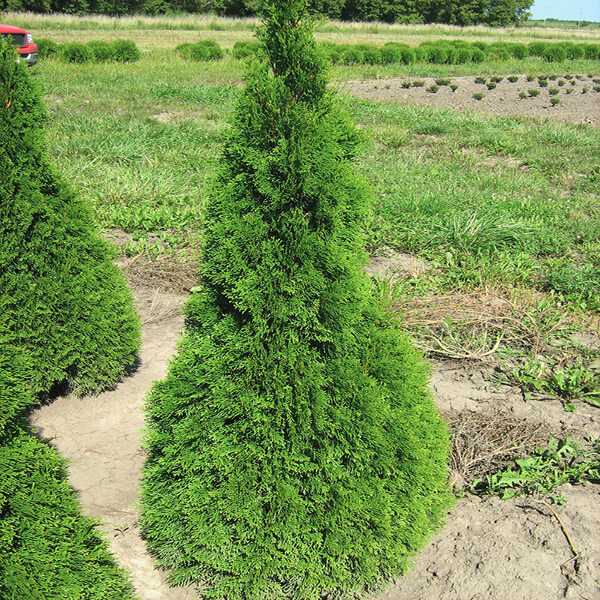
North Pole Arborvitae
A newer cultivar that's been picking up speed. North Pole is even narrower than Emerald, with a slightly more relaxed natural form. About 10-15 feet tall and 3-5 feet wide. Holds its color through cold winters. Zone 3-8, which makes it the widest-zone columnar arborvitae we carry.
Shop North Pole Arborvitae
Thuja occidentalis 'Art Boe'
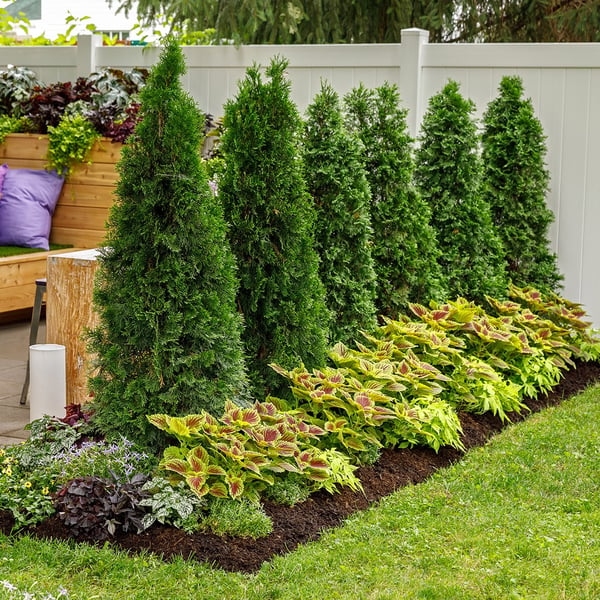
Looking for the very narrowest columnar options for tight gaps? Check our columnar trees and shrubs guide for varieties like Taylor Juniper and Holmstrup Arborvitae.
Cold-Hardy Showstoppers
Three evergreens that earn their keep in Wisconsin and the Upper Midwest.
Norway Spruce
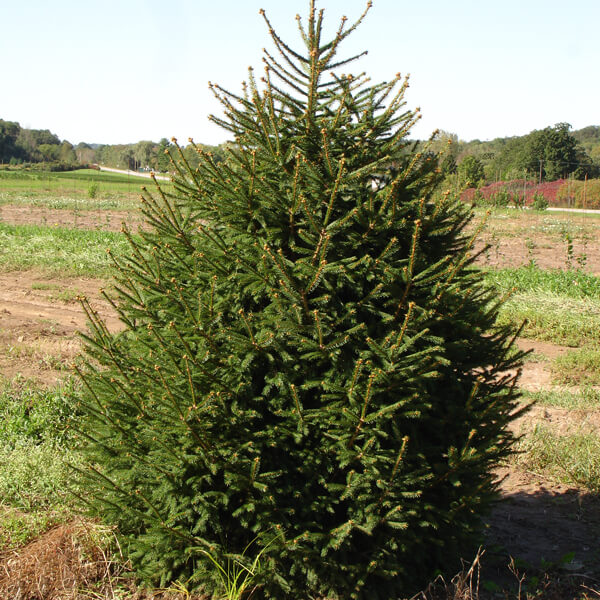
One of the most planted evergreens in the country and a longtime McKay favorite. Norway Spruce grows fast for a spruce (2-3 feet per year once established) and matures into a massive 40-60 foot tall, 25-35 foot wide specimen with classic drooping branches. Zone 2-7, which makes it the most cold-hardy plant on this list. Deer resistant. Originally planted across the Midwest as windbreak and shelterbelt trees, which tells you everything you need to know about how tough they are.
Shop Norway Spruce
Picea abies
Black Hills Spruce
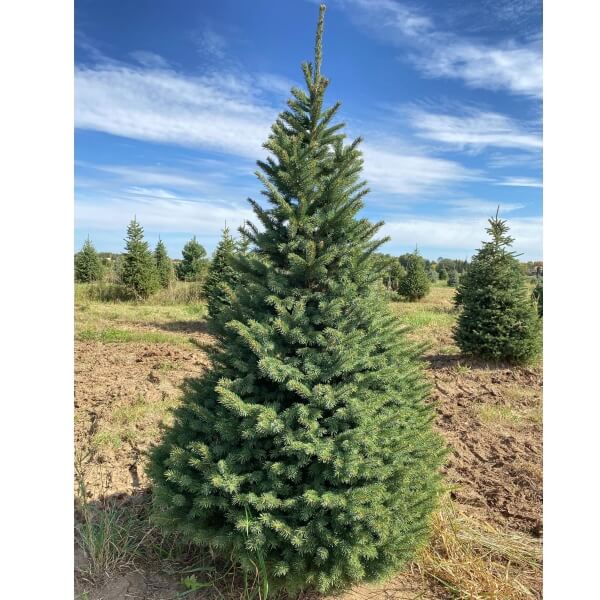
A native, slow-and-steady grower that matures into one of the most beautiful spruces you can plant. Tight pyramidal habit, deep blue-green needles, and a tolerance for everything Wisconsin throws at it. Mature size 25-35 feet tall and 10-20 feet wide. Zone 3-6. Deer resistant, drought tolerant once established.
Shop Black Hills Spruce
Picea glauca 'Densata'
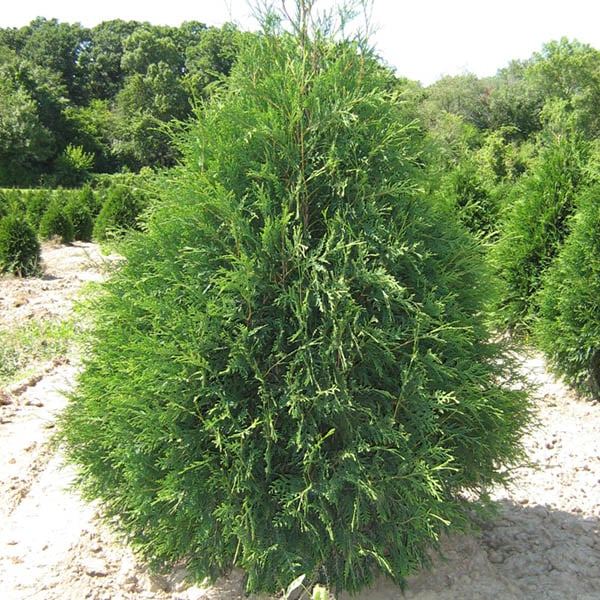
Techny Arborvitae
A favorite at McKay for decades. Techny is wider than Emerald (forms a denser, fuller screen) and was selected for its winter color retention. About 12-15 feet tall and 6-8 feet wide at maturity. Zone 3-7. If you want one tree that gives you a solid screen without the formal look of Emerald, this is it.
Shop Techny Arborvitae
Thuja occidentalis 'Techny'
Tough Plants for Tough Sites
For full-sun, dry, or roadside locations where everything else struggles.
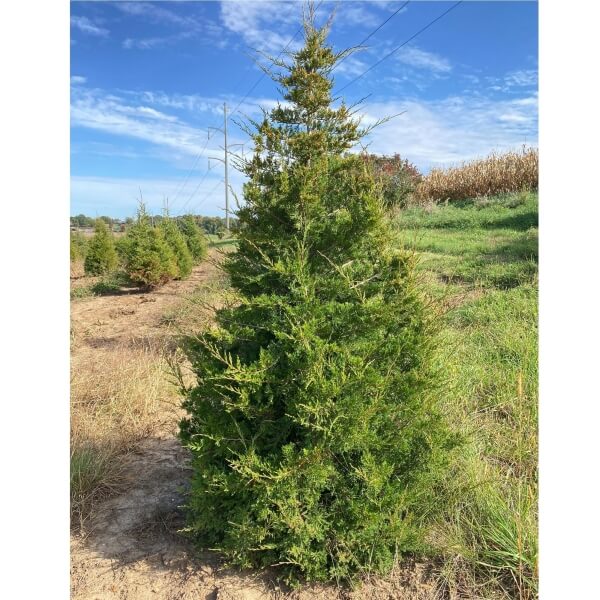
Eastern Redcedar
A native juniper that handles drought, poor soil, road salt, and full sun. Eastern Redcedar grows into a dense pyramidal form, 20-40 feet tall and 10-20 feet wide. Birds love the small blue berries. Zone 3-9, which makes this the most adaptable plant on this list by a wide margin. If you have a difficult site, start here.
Shop Eastern Redcedar
Juniperus virginiana
Star Power Juniper
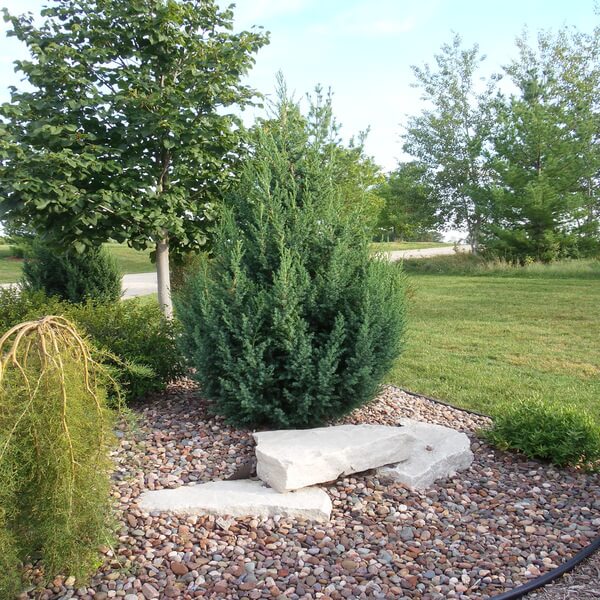
A striking blue-needled upright juniper. Star Power reaches 15-18 feet tall and 8-10 feet wide. Deer resistant, drought tolerant, and adds a color contrast that pure-green hedges can't. Zone 3-6.
Shop Star Power Juniper
Juniperus scopulorum 'Star Power'
The Shade-Tolerant Option
Most evergreens demand full sun. Hicks Yew is the exception.
Hicks Yew
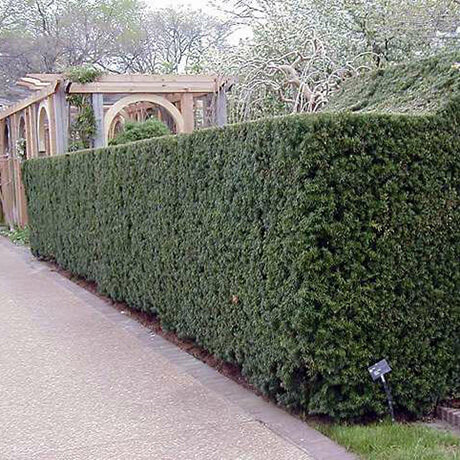
A dark-green upright yew that handles part to full shade where arborvitae and spruce sulk. Hicks Yew forms a 10-12 foot tall, 3-4 foot wide column. It tolerates pruning to almost any shape, which makes it a favorite for formal hedges and tight foundation screens. Zone 4-7. One catch: yew is toxic to livestock and dogs that chew it.
Shop Hicks Yew
Taxus x media 'Hicksii'
Spacing, Planting, and Patience
Three pieces of advice that save more privacy plantings than anything else we tell customers.
Spacing. Look up the mature width of your chosen variety and plant the trees that distance apart, center to center. For a tighter screen, plant at 75% of the mature width. People over-tighten constantly. Trees crowded together get airflow problems, lose lower branches, and look thin by year ten.
Planting time. Fall is the best season for evergreens in Wisconsin. The ground is still warm, roots establish before winter, and the plant goes into spring with a foundation already in place. Spring works too. Mid-summer is the hardest, especially for B&B stock.
The first two years. Water deeply once a week for the first year, less in the second. Drought stress takes out more young privacy trees than disease does. Mulch the root zone three inches deep, keeping the mulch off the trunk.
The Deer Problem
This is the single most important thing on this page. Arborvitae of any variety is deer candy. If you have deer pressure (and most of Wisconsin does), an unprotected arborvitae hedge can be browsed to bare sticks in a single winter. You have three options:
- Plant deer-resistant varieties instead. Spruce, juniper, and pine are all far less appealing to deer than arborvitae. Black Hills Spruce, Eastern Redcedar, and Norway Spruce are your best bets for high-pressure areas.
- Use physical protection. Burlap wraps or 5-foot deer fencing through winter when food gets scarce.
- Spray repellent. Effective if applied consistently every 4-6 weeks. Less work than fencing, more work than picking the right plant.
We've talked to too many customers who lost an Emerald Arborvitae hedge to learn this the hard way. If you know your deer situation is bad, choose accordingly.
In Summary
A good privacy screen is one of the highest-impact plantings you can put in your yard. It blocks sight lines, dampens wind and noise, supports wildlife, and gets more useful every year. Choose the right variety for your space, your zone, and your deer pressure, plant with the right spacing, and water deeply in the first season.
Questions about which one fits your yard? Contact our team or stop by our garden centers in Oregon and Oshkosh, Wisconsin. We'd rather help you pick the right tree once than help you replace the wrong one in three years.
Looking for more landscape planning guides? Check out our Green Tips page for posts on mulching, fall planting, watering, and more!