
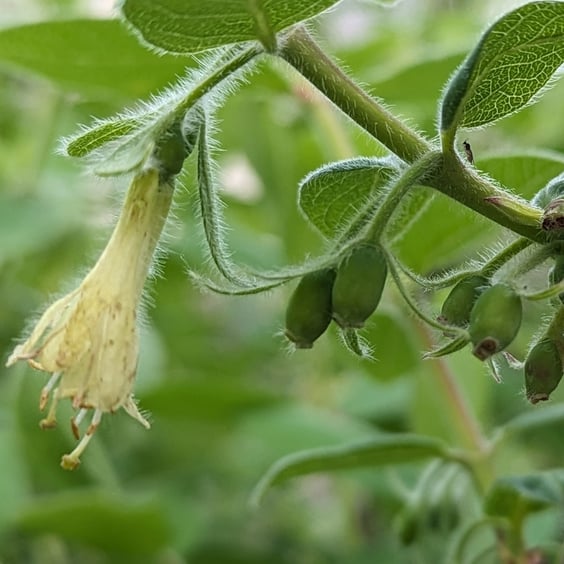
Indigo Gem Honeyberry
Growing zones
See Zone Map >Status: In stock
- Sun, Part Sun/Shade
 Mature Plant Size (H x W):
4-5' x 4-5'
Mature Plant Size (H x W):
4-5' x 4-5'  Bloom Season:
Spring
Bloom Season:
Spring
- Attracts Bees
- Edible to People
- Attracts Butterflies
- Attracts Pollinators
Planting & Care for Honeyberry Bushes
Opening Plant Material
- Containers: Saturate container plants thoroughly before planting by submerging them in a larger container of water until bubbling stops, then remove. Dig a hole no deeper than the container depth and at least 6" wider on all sides.
Planting
- Choose the Right Spot: Plant Indigo Gem Honeyberry in full sun to partial shade. Full sun (6+ hours daily) produces the highest fruit yields. Like all Honeyberries, it is one of the earliest fruiting shrubs available, ripening weeks ahead of strawberries.
- Pollination: Indigo Gem is an excellent pollinator companion variety and pairs particularly well with 'Aurora' and other Lonicera caerulea cultivars. Plant two compatible varieties within 6 feet of each other for reliable cross-pollination and maximum fruit set.
- Soil: Indigo Gem thrives in moist, well-draining soil with a slightly acidic to neutral pH (5.5-7.0). It adapts well to loam, sandy loam, and clay soils. Amend heavy clay with compost to improve drainage and root establishment.
- Planting Time: The best time to plant Indigo Gem Honeyberry is in early spring or fall while the plant is dormant. Honeyberry breaks dormancy very early so plant as soon as the ground is workable in spring.
- Spacing: Space plants 4-6 feet apart in a row, with rows 6-8 feet apart. This allows for mature spread, good air circulation, and easy access at harvest time.
Watering
- Watering Frequency: Water deeply at planting, then 1-2 times per week during the first growing season. Once established, Indigo Gem Honeyberry is moderately drought-tolerant but produces the best fruit with consistent moisture.
- Critical Watering Period: Consistent moisture is especially important during fruit development in late spring. Irregular watering at this stage can cause small or sparse fruit. Drip irrigation is ideal for honeyberry production.
- Avoid Overwatering: Do not allow roots to sit in standing water. Ensure soil drains well to prevent root rot.
Fertilizing
- Fertilizer Type: Apply a balanced slow-release fertilizer (10-10-10) or a fertilizer formulated for berry shrubs in early spring as new growth emerges. A light topdressing of compost works well as an organic alternative.
- Application: Avoid over-fertilizing with high-nitrogen products, which can promote excessive leafy growth at the expense of fruit. Fertilize once per year in spring for best results.
Mulching
- Mulch: Apply a 3-4" layer of organic mulch (wood chips, shredded bark, or straw) around the base of the shrub to retain soil moisture, regulate temperature, and suppress competing weeds. Keep mulch pulled back 2-3" from the main stem to prevent rot.
Pruning and Maintenance
- Young Plants (Years 1-3): Minimal pruning is needed. Remove any dead, damaged, or crossing branches in late winter or early spring before bud break. Avoid heavy pruning while the plant is establishing.
- Mature Plants: Once plants reach 4-5 years old, begin renewal pruning by removing the oldest, thickest canes at the base every few years. This encourages vigorous new growth and improves fruit production.
- Timing: Prune in late winter or immediately after harvest. Avoid pruning in fall, as Honeyberry breaks dormancy early and pruning can stimulate growth vulnerable to late frosts.
Harvesting
- When to Harvest: Indigo Gem Honeyberry berries ripen in late May to early June, earlier than almost any other fruiting shrub. Berries are ready when they turn deep blue-purple all the way through (not just on the outside). Taste-test for sweetness before picking.
- How to Harvest: Gently hand-pick ripe berries or place a tarp under the shrub and lightly shake branches. Indigo Gem tends to ripen over a short window, so check plants every few days once color develops.
- Flavor Profile: Indigo Gem berries have a rich, sweet-tart flavor with notes similar to blueberry and wild berry. Enjoy fresh, in jams, juices, baked goods, or frozen for later use.
Winter Care
- Cold Hardiness: Indigo Gem Honeyberry is exceptionally cold-hardy to USDA Zone 2 (-50°F), making it one of the hardiest fruiting shrubs available for northern and cold-climate gardens. No winter protection is needed in most regions.
- Late Frost Caution: Because Honeyberry blooms very early in spring, late frosts can occasionally damage blossoms and reduce fruit set. Planting in a slightly sheltered location or covering with frost cloth during late cold snaps can help protect the harvest.
Pests and Disease
- Birds: The biggest threat to your Honeyberry harvest is birds. Cover plants with bird netting as berries begin to ripen to protect your crop.
- Pests: Indigo Gem Honeyberry has strong pest resistance. Occasional aphids may appear on new growth. You can treat with a strong water spray or insecticidal soap. Powdery mildew can occur in humid conditions; improve air circulation by pruning and proper spacing.
- Diseases: Honeyberry is largely disease-resistant when planted in well-draining soil with good airflow. Avoid overhead watering to minimize fungal issues. Remove and dispose of any diseased plant material promptly.
Planting & Handling Help
Download our Planting and Handling Guide below to plan for a successful arrival and install of your plants. Be sure to water all plants as soon as they arrive and every day until you’re ready to plant. Keep any bare root bundles in a shady, cool spot with the roots covered at all times.
Learn More
Watch our videos on handling bare root plants, how your order is prepared for shipment and more.
Plant Sizing
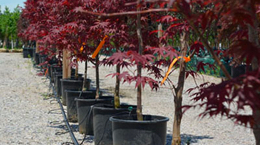
What is the difference between Containers, Grow Bags, Bare Root, and Balled & Burlap (B&B)?
Shipping Times
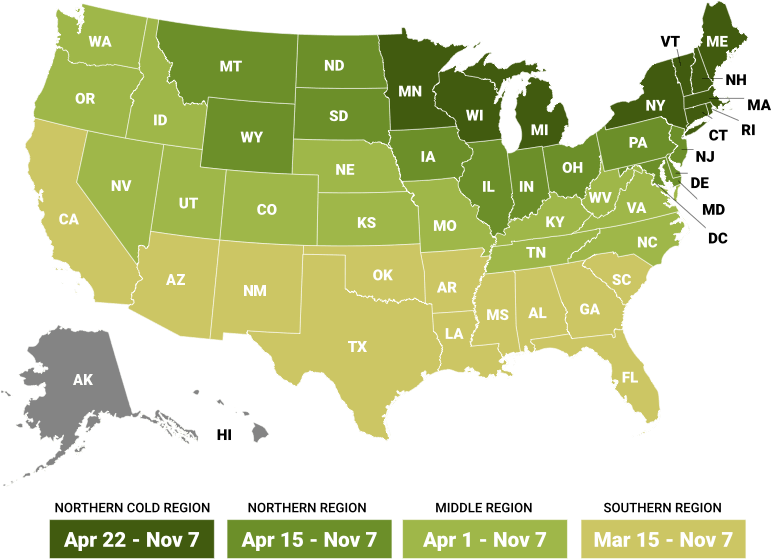
Our FedEx and local shipping times depend on two factors, one is by the region and the second is the type of product being shipped. For example, small fruits are only shipped in spring, but majority of our perennials are shipped from spring until fall. Keep in mind the dates below act as a general guide. Due to unpredictable weather, staffing, inventory and industry demands these timelines can change. Therefore, we cannot guarantee any of these times.
Shipping Dates by Region*
Northern Cold Region: April 22nd - November 7th
Northern Region: April 15th - November 7th
Middle Region: April 1st - November 7th
Southern Region: March 15th - November 7th
Local Delivery (small radius from Waterloo, WI): April 22nd - November 7th
Shipping Dates by Season*
Spring Shipping: Region Start Date (above) - May
Fall Shipping: September - November
Due to unpredictable weather, these times may vary. Some varieties are exceptions due to heat and plant health reasons. Enter your shipping zip code at the top of this page and be sure to check the shipping information on each product before you add it to your cart. If the product is too large or restricted in your state, you will not be able to checkout with that item in your cart.