
Primo® Wild Rose Coral Bells
Growing zones
See Zone Map >Status: In stock
- Part Sun/Shade, Shade
 Mature Plant Size (H x W):
8-10" x 18-22"
Mature Plant Size (H x W):
8-10" x 18-22"  Bloom Season:
Summer
Bloom Season:
Summer
- Attracts Bees
- Deer Resistant
- Low Maintenance
- Long Blooming
- Walnut Toxicity Resistant
- Attracts Butterflies
- Attracts Pollinators
Planting & Care for Primo® Wild Rose Coral Bells
Opening Plant Material
- Container: Saturate container plants thoroughly before planting by submerging them in a larger container of water until bubbling stops, then remove. Dig a hole no deeper than the container depth and at least 6" wider on all sides.
Planting
- Choose the Right Spot: Primo® Wild Rose Coral Bells thrives in partial shade to full shade, making it one of the most striking shade perennials available for home gardens. It can tolerate full sun in cooler northern climates with consistent moisture, but afternoon shade is strongly recommended in warmer zones to prevent foliage scorch. Morning sun with afternoon shade is the ideal balance for the richest foliage color.
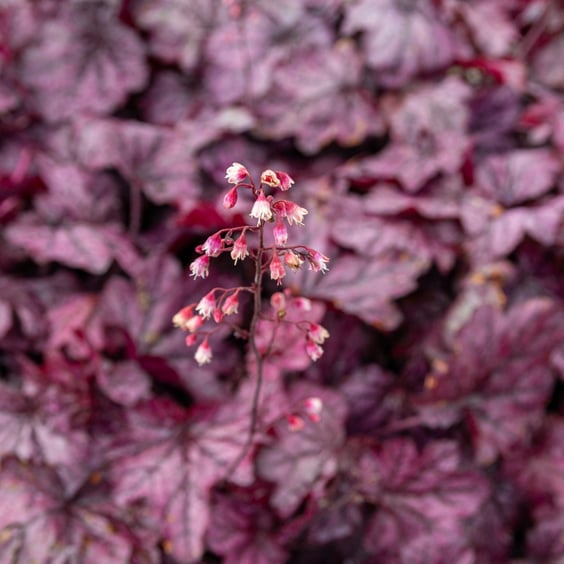
- Ornamental Features: Wild Rose is prized for its large, bold, rosy-purple leaves with deep charcoal-gray veining, a dramatic combination that provides year-round foliage interest. Cooler temperatures in spring and fall deepen the color to rich burgundy-plum, while summer warmth brightens it to vivid rose. In midsummer, upright dark burgundy stems carry clusters of delicate rosy-pink bell-shaped flowers reaching up to 22" tall, attracting hummingbirds and butterflies.
- Soil: Plant in humus-rich, well-draining soil with a neutral to slightly acidic pH (6.0–7.0). Good drainage is essential, particularly in shaded areas where soil stays moist longer. Amend heavy clay soils with compost before planting to improve drainage and root health.
- Planting Time: The best time to plant Primo® Wild Rose Coral Bells is in spring or early fall. Plant at the same depth as the container do not bury the crown, as this is one of the most common causes of Heuchera decline.
- Spacing: Space plants 18-20" apart. Primo® Wild Rose forms a dense, low mound 8-10" tall and 18-20" wide at maturity, a compact habit that makes it ideal for edging, massing, ground cover, and container use.
Watering
- Watering Frequency: Keep soil evenly moist but not consistently wet. Water deeply when the top inch of soil feels dry. Consistent moisture is especially important during the first growing season and during hot, dry periods.
- Watering Method: To reduce the risk of foliar disease, water at the base of the plant in the morning so any moisture on foliage can evaporate before evening. Avoid overhead watering whenever possible.
- Avoid Overwatering: Heuchera is susceptible to crown and root rot in waterlogged conditions. Never allow water to pool around the crown. Good soil drainage is essential, particularly in shaded planting sites.
- Heat & Drought: Under high heat and intense sun, Wild Rose may show marginal leaf browning if water-stressed. Shade protection and consistent moisture during peak summer heat will keep the foliage looking vibrant.
Fertilizing
- Fertilizer Type: Primo® Wild Rose is not a heavy feeder. In average garden soils, a light topdressing of compost in early spring is often all that is needed to support healthy growth. In nutrient-poor soils, apply a balanced slow-release granular fertilizer (10-10-10) once in early spring.
- Application: Avoid over-fertilizing, which can produce soft, floppy growth more susceptible to disease. Do not fertilize in fall or winter, late-season fertilization stimulates new growth that is vulnerable to frost damage.
Mulching
- Mulch: Apply a 2-3" layer of organic mulch (shredded bark or compost) around the base of the plant to retain moisture, moderate soil temperature, and suppress weeds. Keep mulch pulled back slightly from the crown to allow air circulation and prevent rot. In colder climates (Zones 4-5), a thicker layer of mulch or evergreen boughs applied in late fall provides valuable protection for the shallow crown through winter freeze-thaw cycles.
Pruning and Maintenance
- Spring Cleanup: Primo® Wild Rose is semi-evergreen to evergreen and holds its foliage through most winters. In early spring, remove any tattered, winter-damaged, or brown outer leaves by hand to tidy the clump and make way for fresh new growth.
- Deadheading: Remove spent flower stalks after blooming by cutting them back to the base of the foliage clump. This keeps the plant looking neat and directs energy back into foliage and root development.
- Heaving: Heuchera crowns can be pushed out of the soil by freeze-thaw cycles in late winter. Check plants in early spring and gently press any heaved crowns
back into the soil. Consistent mulching in fall greatly reduces this problem. - Dividing: Divide clumps every 3-4 years in early spring or early fall to rejuvenate growth and prevent the woody crown from becoming too large. Dig the clump, separate rosettes each with healthy roots, and replant at the correct depth.
Landscape Uses & Design Tips
- Shade Garden Essential: Primo® Wild Rose is one of the finest shade perennials for bold foliage color. Use it to light up dark corners, shaded borders, and woodland garden settings where flowering plants struggle.
- Container Gardening: Wild Rose excels as a 'thriller' in container combinations. Plant it as the central focal point surrounded by spillers and fillers for a stunning patio or deck display. Its compact size and year-round foliage interest make it an outstanding container perennial.
- Companion Planting: Pairs beautifully with Hostas, ferns, Astilbe, and other Heuchera varieties in shade gardens. The bold rosy-purple foliage provides striking contrast against chartreuse, gold, and blue-green foliage plants.
- Wildlife Value: The midsummer flower spikes are a reliable attractant for hummingbirds and butterflies, adding wildlife value to shaded garden spaces.
Winter Care
- Cold Hardiness: Primo® Wild Rose Coral Bells is cold-hardy in USDA Zones 4-9. It is semi-evergreen to evergreen in most climates, retaining its colorful foliage through mild winters and providing landscape interest when little else is growing.
- Winter Protection: In Zones 4-5, apply a generous layer of mulch or loose evergreen boughs over the crown after the ground freezes in late fall. This insulates the crown from damaging freeze-thaw cycles and greatly improves winter survival. Remove the covering gradually in early spring as temperatures warm.
- Winter Foliage Color: One of Wild Rose's most celebrated features is its rich burgundy-plum winter foliage color. Cooler temperatures intensify the leaf color dramatically, making it a standout in the winter landscape long after other perennials have disappeared.
Pests and Diseases
- Deer & Rabbit Resistant: Primo® Wild Rose Coral Bells is deer and rabbit resistant, making it a reliable choice for gardens with wildlife pressure, a significant advantage for a shade perennial.
- Pests: Heuchera is generally pest-resistant. Vine weevil is the most notable pest concern, adults notch leaf margins and larvae feed on roots. Apply beneficial nematodes to moist soil in late summer or early fall if damage is observed. Occasional foliar aphids can be treated with insecticidal soap.
- Crown Rot (Rhizoctonia): The most serious disease threat to Heuchera is crown rot, caused by consistently wet soil around the crown. Prevent it by ensuring excellent drainage, avoiding overwatering, keeping mulch away from the crown, and planting at the correct depth. Remove and discard any plants showing signs of soft, rotted crowns.
- Powdery Mildew & Botrytis: These fungal issues can occur in poorly ventilated, overly humid conditions. Ensure adequate plant spacing, water at the base in the morning, and remove affected foliage promptly. Proper siting in a location with good air movement greatly reduces the risk
Planting & Handling Help
Download our Planting and Handling Guide below to plan for a successful arrival and install of your plants. Be sure to water all plants as soon as they arrive and every day until you’re ready to plant. Keep any bare root bundles in a shady, cool spot with the roots covered at all times.

Learn More
Watch our videos on handling bare root plants, how your order is prepared for shipment and more.
Plant Sizing
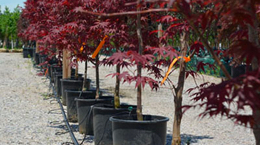
What is the difference between Containers, Grow Bags, Bare Root, and Balled & Burlap (B&B)?
Shipping Times
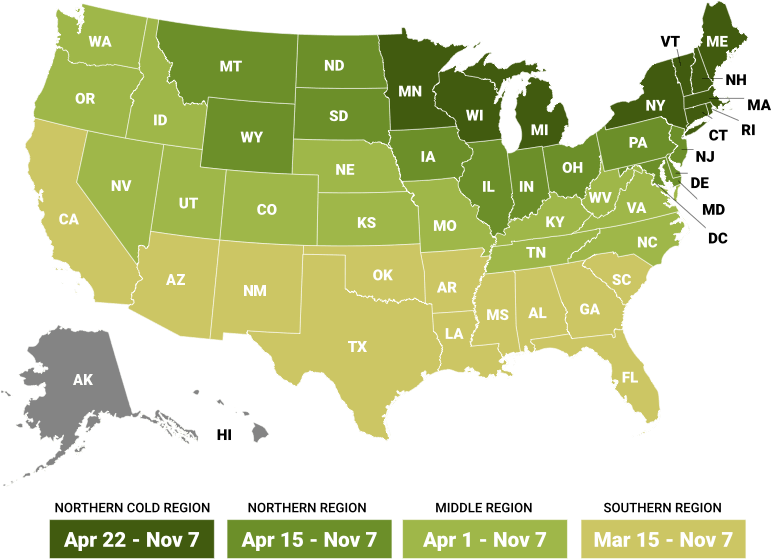
Our FedEx and local shipping times depend on two factors, one is by the region and the second is the type of product being shipped. For example, small fruits are only shipped in spring, but majority of our perennials are shipped from spring until fall. Keep in mind the dates below act as a general guide. Due to unpredictable weather, staffing, inventory and industry demands these timelines can change. Therefore, we cannot guarantee any of these times.
Shipping Dates by Region*
Northern Cold Region: April 22nd - November 7th
Northern Region: April 15th - November 7th
Middle Region: April 1st - November 7th
Southern Region: March 15th - November 7th
Local Delivery (small radius from Waterloo, WI): April 22nd - November 7th
Shipping Dates by Season*
Spring Shipping: Region Start Date (above) - May
Fall Shipping: September - November
Due to unpredictable weather, these times may vary. Some varieties are exceptions due to heat and plant health reasons. Enter your shipping zip code at the top of this page and be sure to check the shipping information on each product before you add it to your cart. If the product is too large or restricted in your state, you will not be able to checkout with that item in your cart.