
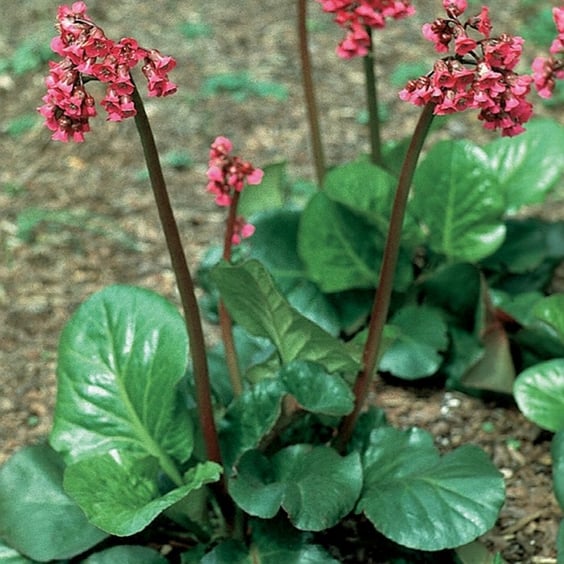
Rotblum Bergenia
Growing zones
See Zone Map >Status: In stock
- Part Sun/Shade, Shade
 Mature Plant Size (H x W):
12-14" x 12-14"
Mature Plant Size (H x W):
12-14" x 12-14"  Bloom Season:
Summer
Bloom Season:
Summer
- Attracts Bees
- Deer Resistant
- Low Maintenance
- Attracts Butterflies
- Attracts Pollinators
Planting & Care for Rotblum Bergenia
Opening Plant Material
- Container - Saturate container plants thoroughly before planting by submerging them in a larger container of water until bubbling stops, then remove. Dig a hole no deeper than the container depth and at least 6" wider on all sides.
Planting
- Choose the Right Spot: Rotblum Bergenia performs best in partial shade to full shade, making it one of the top choices for low-light and shady garden areas. It can tolerate morning sun with afternoon shade, but direct afternoon sun in hot climates can scorch the foliage.
- Four-Season Interest: Rotblum Bergenia is a standout evergreen perennial prized for bold, glossy foliage that turns deep burgundy-red in fall and winter, plus vivid rose-pink flowers in early spring, delivering ornamental interest year-round.
- Soil: Bergenia cordifolia adapts to a wide range of soils but prefers moist, humus-rich, well-draining soil with a slightly acidic to neutral pH (5.5-7.0). It tolerates clay and rocky soils better than most perennials. Avoid overly dry or waterlogged conditions.
- Planting Time: The best time to plant Rotblum Bergenia is in spring or early fall, giving roots time to settle in before temperature extremes. Early fall planting allows excellent establishment before winter dormancy.
- Spacing: Space plants 12-18" apart for ground cover use, or 18-24" apart for specimen plantings. Bergenia spreads slowly by rhizomes over time, eventually forming attractive, weed-suppressing clumps.
Watering
- Watering Frequency: Water deeply at planting, then once or twice per week during the first growing season. Established Rotblum Bergenia is reasonably drought-tolerant but looks its best with consistent moisture, especially during hot, dry periods.
- Shade Advantage: Plants grown in shadier spots require less frequent watering than those in sunnier positions, as soil moisture is retained longer. Check soil moisture at 2" depth and water when it feels dry.
- Avoid Overwatering: While Bergenia appreciates consistent moisture, it does not tolerate standing water or waterlogged soil. Good drainage is essential to prevent crown and root rot.
Fertilizing
- Fertilizer Type: Apply a balanced slow-release granular fertilizer (10-10-10) or a topdressing of compost in early spring as new growth begins. This supports healthy foliage development and a strong flower display.
- Application: Fertilize once per year in spring. Bergenia is not a heavy feeder. Over-fertilizing, particularly with high-nitrogen products, can produce excessive leafy growth at the expense of the plant's characteristic compact habit and flower production.
Mulching
- Mulch: Apply a 2-3" layer of organic mulch (shredded bark, compost, or leaf mold) around plants to retain soil moisture, moderate temperature, and suppress weeds. Keep mulch pulled back slightly from the crown of the plant to prevent rot. Mulching is especially beneficial in colder climates to protect the shallow rhizomes over winter.
Pruning and Maintenance
- Foliage Cleanup: Rotblum Bergenia is evergreen and requires minimal maintenance. In early spring, remove any tatty, winter-damaged, or brown outer leaves by pulling them away from the base to tidy the plant and make way for fresh growth and emerging flower stalks.
- Deadheading: Remove spent flower stalks after blooming to keep the plant looking neat. This is not required for plant health but improves the overall appearance of the clump.
- Dividing: Divide clumps every 3-5 years in spring or early fall to rejuvenate growth and propagate new plants. Dig up the rhizome clump, separate into sections each with healthy roots and foliage, and replant at the same depth.
Winter Care
- Cold Hardiness: Rotblum Bergenia is cold-hardy in USDA Zones 3-8, making it an excellent year-round perennial for a wide range of climates. Its large, leathery leaves persist through winter, turning rich shades of burgundy, bronze, and deep red, one of its most celebrated ornamental features.
- Winter Protection: In Zone 3-4, a light layer of mulch or evergreen boughs over the crown in late fall provides extra insulation for the rhizomes during the coldest months. Remove the covering in early spring before new growth emerges.
- Early Spring Blooms: Bergenia is one of the earliest perennials to flower, often producing its rose-pink flower clusters while snow is still on the ground. This makes it a valuable source of early-season nectar for pollinators emerging in spring.
Pests and Diseases
- Slugs & Snails: The large, succulent leaves of Bergenia can attract slugs and snails, particularly in moist, shaded conditions. Use iron phosphate slug bait, diatomaceous earth, or beer traps to manage populations. Improving air circulation and reducing excess moisture around the crown can help deter them.
- Vine Weevil: Vine weevil larvae can damage the rhizomes of Bergenia in some regions. Look for notched leaf margins (a sign of adult feeding) and treat with beneficial nematodes applied to moist soil in late summer or early fall.
- Diseases: Rotblum Bergenia is generally disease-resistant. Leaf spot and crown rot can occur in poorly drained or overly wet soils. Ensure good drainage, avoid overhead watering, and remove affected foliage promptly. Adequate spacing promotes airflow and reduces fungal pressure.
- Deer & Rabbit Resistance: Bergenia's thick, leathery foliage makes it largely unappealing to deer and rabbits, making it an excellent choice for gardens with wildlife pressure.
Planting & Handling Help
Download our Planting and Handling Guide below to plan for a successful arrival and install of your plants. Be sure to water all plants as soon as they arrive and every day until you’re ready to plant. Keep any bare root bundles in a shady, cool spot with the roots covered at all times.

Learn More
Watch our videos on handling bare root plants, how your order is prepared for shipment and more.
Plant Sizing
What is the difference between Containers, Grow Bags, Bare Root, and Balled & Burlap (B&B)?
Shipping Times
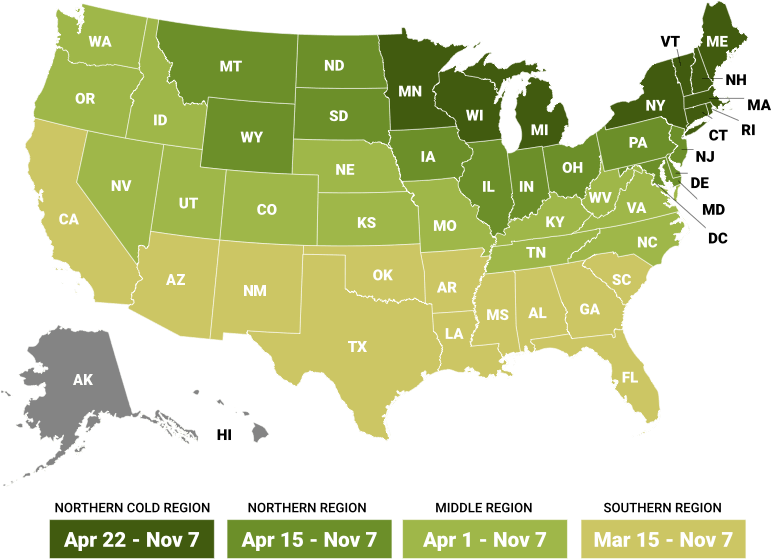
Our FedEx and local shipping times depend on two factors, one is by the region and the second is the type of product being shipped. For example, small fruits are only shipped in spring, but majority of our perennials are shipped from spring until fall. Keep in mind the dates below act as a general guide. Due to unpredictable weather, staffing, inventory and industry demands these timelines can change. Therefore, we cannot guarantee any of these times.
Shipping Dates by Region*
Northern Cold Region: April 22nd - November 7th
Northern Region: April 15th - November 7th
Middle Region: April 1st - November 7th
Southern Region: March 15th - November 7th
Local Delivery (small radius from Waterloo, WI): April 22nd - November 7th
Shipping Dates by Season*
Spring Shipping: Region Start Date (above) - May
Fall Shipping: September - November
Due to unpredictable weather, these times may vary. Some varieties are exceptions due to heat and plant health reasons. Enter your shipping zip code at the top of this page and be sure to check the shipping information on each product before you add it to your cart. If the product is too large or restricted in your state, you will not be able to checkout with that item in your cart.